Why Your Business Packaging Strategy Is Costing You More Than You Think
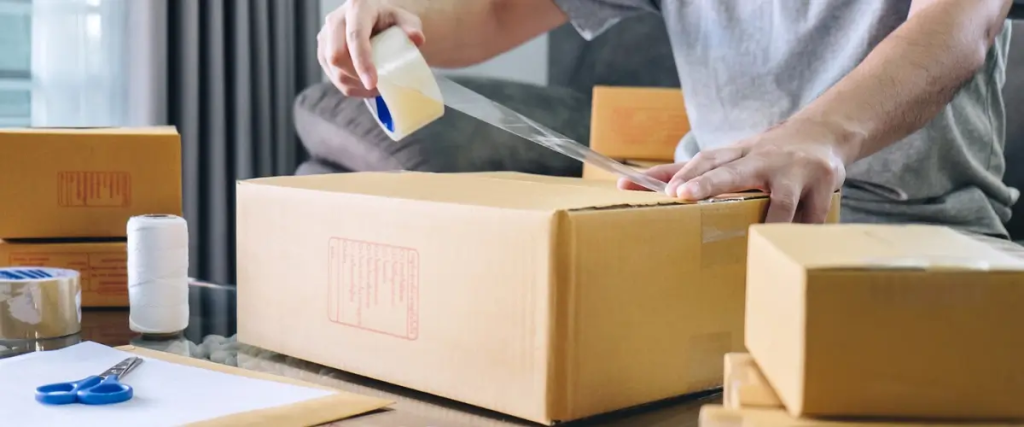
When business owners look for costs to cut, packaging rarely makes the shortlist. It sits in the background, ordered on repeat, treated as a fixed overhead. That assumption is worth examining. For businesses that ship physical products, packaging is often one of the most controllable cost lines in the operation, and one of the most frequently mismanaged.
The Hidden Cost of the Wrong Box
Most businesses buy corrugated boxes in standard sizes. They choose a size that fits their largest product, then use it for everything. The economics of this approach look simple: one SKU to manage, one supplier relationship, straightforward reordering.
The actual cost is less straightforward. Dimensional weight pricing, used by every major UK and European courier, charges based on the volume of the parcel, not just its weight. A box that is 20% larger than necessary does not increase your shipping cost by 20%. Depending on the density of your product, it can double it.
Then there is void fill. Every gap inside an oversized box needs to be filled with something: bubble wrap, paper, foam. These materials have a purchase cost, a labour cost to apply, and a weight contribution that adds to shipping. They are also, in most cases, an irritant to the end customer.
A study of e-commerce returns consistently shows that packaging that arrives damaged, or that feels excessive and wasteful, contributes to negative reviews and reduced repeat purchase rates. The box is the first physical interaction a customer has with your brand. It communicates whether you care about their experience.
Right-Sizing: The Simple Version
Right-sizing corrugated packaging means specifying boxes based on what you actually ship, not a generic size that happens to work. For businesses with a small product range, this might mean moving from one standard box to three specific sizes. For businesses with complex product mixes, it might involve a more systematic audit.
The process starts by measuring your most common shipped configurations, not just individual products but how they are typically combined in an order. A packaging manufacturer who understands this can design a small range of boxes that covers 90% of your order combinations without excess space.
The upfront cost is a new design and potentially new tooling. The ongoing saving on materials, void fill, and courier charges typically recovers that investment within a few months for any business shipping more than a few hundred parcels per week.
Sustainability Requirements Are Tightening
Extended Producer Responsibility legislation in the UK, which came into full effect in 2024, places the cost of packaging waste collection and recycling onto the businesses that produce packaging. The charge is calculated on packaging weight placed on the market. A business that right-sizes its packaging and eliminates unnecessary void fill reduces both its material cost and its EPR liability simultaneously.
For businesses selling to large retailers, sustainability requirements in packaging are increasingly embedded in supplier contracts. Major supermarkets and e-commerce platforms have committed to packaging reduction targets. If your packaging specification does not align with those commitments, you risk being asked to change it or, in some cases, losing the listing.
What Good Packaging Procurement Looks Like
The businesses that manage packaging costs well treat it as a category requiring occasional active review, not a permanent repeat order. They review their specification when products change, when shipping volumes increase, or when courier contracts are renegotiated.
They also maintain a relationship with their supplier that goes beyond transactional reordering. A manufacturer who understands your product range and shipping patterns can proactively flag when a better specification is available, or when changes in board pricing make a redesign economically attractive.
Manor Packaging, based in the UK, is one example of a manufacturer that works with businesses on specification rather than just order fulfilment. The ability to advise on structural design, material selection, and print options under one roof means the conversation can cover total cost of ownership, not just unit price.
Print Quality as a Business Asset
For businesses selling premium products, the print quality on corrugated packaging is a brand signal. A white mailer box with a clean single-colour print is a different experience from a brown box with a generic exterior. Neither is inherently better. The question is whether your packaging matches the expectation set by the rest of your customer touchpoints.
Digital print technology has made high-quality corrugated print accessible at lower minimum order quantities than it was five years ago. A business running seasonal promotions or limited edition products can now commission short print runs without the tooling cost that previously made this impractical.
The Business Case in Summary
The case for reviewing your corrugated packaging specification is straightforward. Right-sizing reduces material and shipping costs. Specifying print that reflects your brand improves customer perception. Using certified, recyclable materials reduces EPR costs and meets retailer requirements.
None of this requires a significant upfront investment. It requires a conversation with a manufacturer who can model the costs for your specific operation. For most businesses shipping physical products, that conversation pays for itself quickly. The question is why more businesses do not have it sooner.
If packaging feels like a fixed overhead rather than a managed cost line, it is worth scheduling a specification review with your supplier. The result might surprise you.