How to Plan a Visit to the Grand Egyptian Museum
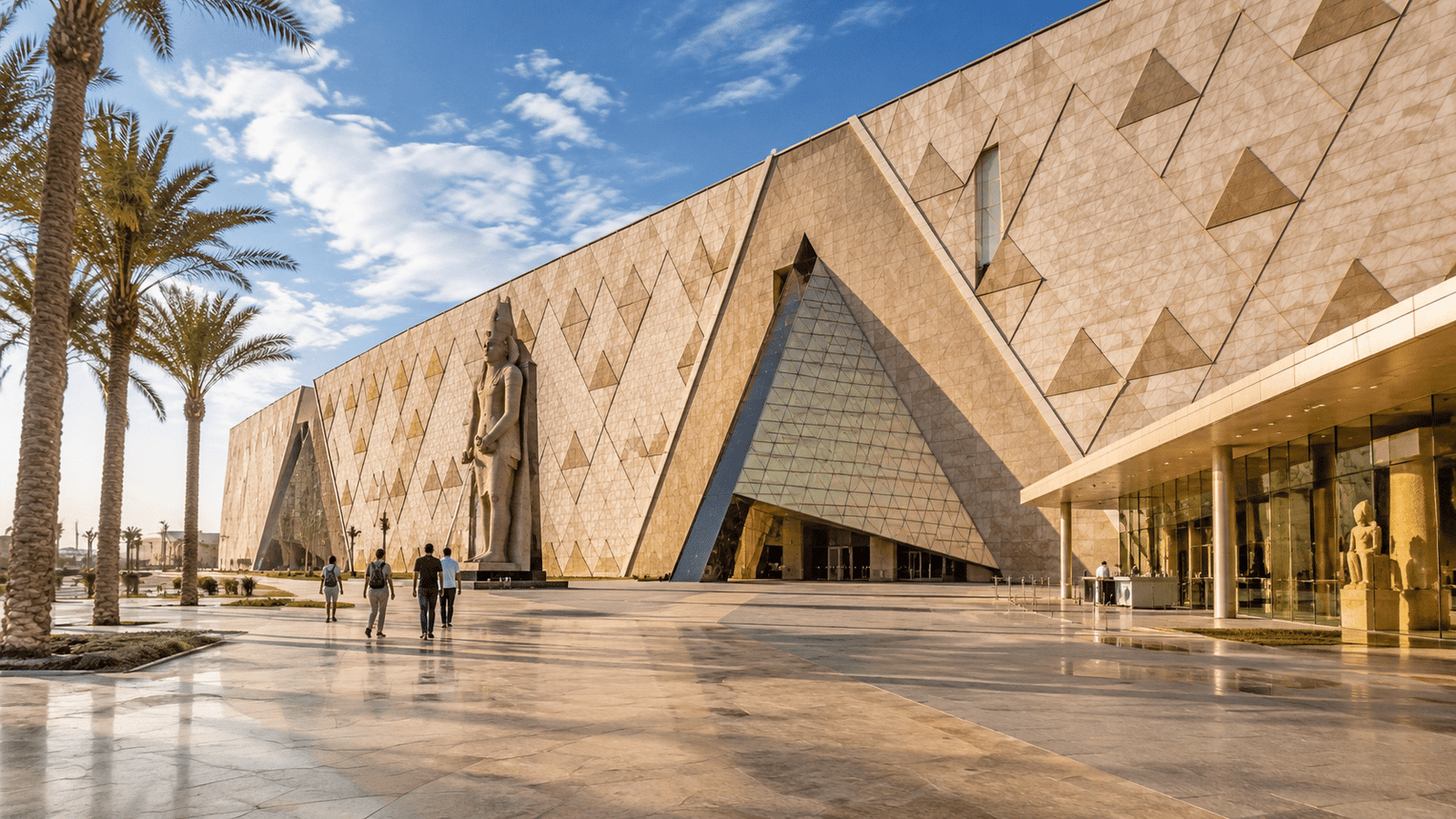
The museum beside the Giza pyramids is so large that a casual visit can leave you tired, short of time and having missed the best parts. It holds more than 100,000 objects across twelve galleries, and since it opened to the public in November 2025 it has become one of the busiest places in Egypt. A little planning turns a rushed walk-through into a visit you will remember.
Book a timed ticket in advance
Entry is managed through timed slots, so turning up without a booking is a gamble. Book through the official museum website rather than a reseller, and check the current prices and opening hours at the time you buy, since both can change. Choosing an early slot usually means cooler weather outside, thinner crowds in the first galleries and more energy for the long walk ahead.
Decide what matters most to you
The Grand Egyptian Museum is far too big to see properly in one sitting, so choose your priorities before you arrive. Most visitors begin with the Grand Staircase, which climbs through the history of ancient Egypt past colossal statues and ends at a glass wall with a view across to the pyramids. At the top are the Tutankhamun galleries, where the complete collection from the young king’s tomb is displayed together for the first time. Allow at least an hour for them.
Beyond those highlights, the main galleries run in chronological order from prehistory to the Greco-Roman period, and the museum also houses the ancient boats associated with the pharaoh Khufu. If you have only three hours, concentrate on the staircase, Tutankhamun and the boat. Younger visitors often enjoy the colossal statues and the boat more than long glass cases, so let them help choose the order. If you have four or more, add the main galleries at a gentler pace.
Pair it sensibly with Giza
The museum stands only a short drive from the pyramids, which makes it tempting to combine both in a single day. Be realistic. Heat, crowds and distance wear people out, and seeing the pyramids at their best needs time and light. Many travellers split the two, taking the museum on one morning and the plateau on another, or visiting the pyramids at first light and the museum in the cooler, air-conditioned afternoon.
Practical points that make a difference
Wear comfortable shoes, because the distances inside are long. Bring water and expect to leave larger bags in the cloakroom. The complex includes places to eat, and a proper break halfway through keeps your concentration up for the second half of the visit. Check the current photography rules at the entrance, as they can differ between areas. Consider a guide for the Tutankhamun section, where explanation transforms a dazzling display into a story, or use the museum’s own information if you prefer to go at your own speed.
Remember that the Egyptian Museum in Tahrir Square remains a separate attraction with its own collection. Some travellers visit both on different days, while others choose one depending on the time they have.
Fit it into the wider trip
The museum works well at the start of an Egyptian holiday, because it gives context that makes later temples and tombs mean more. Visitors who see the Tutankhamun treasures first often arrive in Luxor more ready to appreciate the Valley of the Kings. Whatever the order, allow a full half day rather than squeezing it between other plans.
Plan the booking, the priorities and the timing, and the Grand Egyptian Museum becomes one of the highlights of a trip to Egypt rather than something to tick off.